
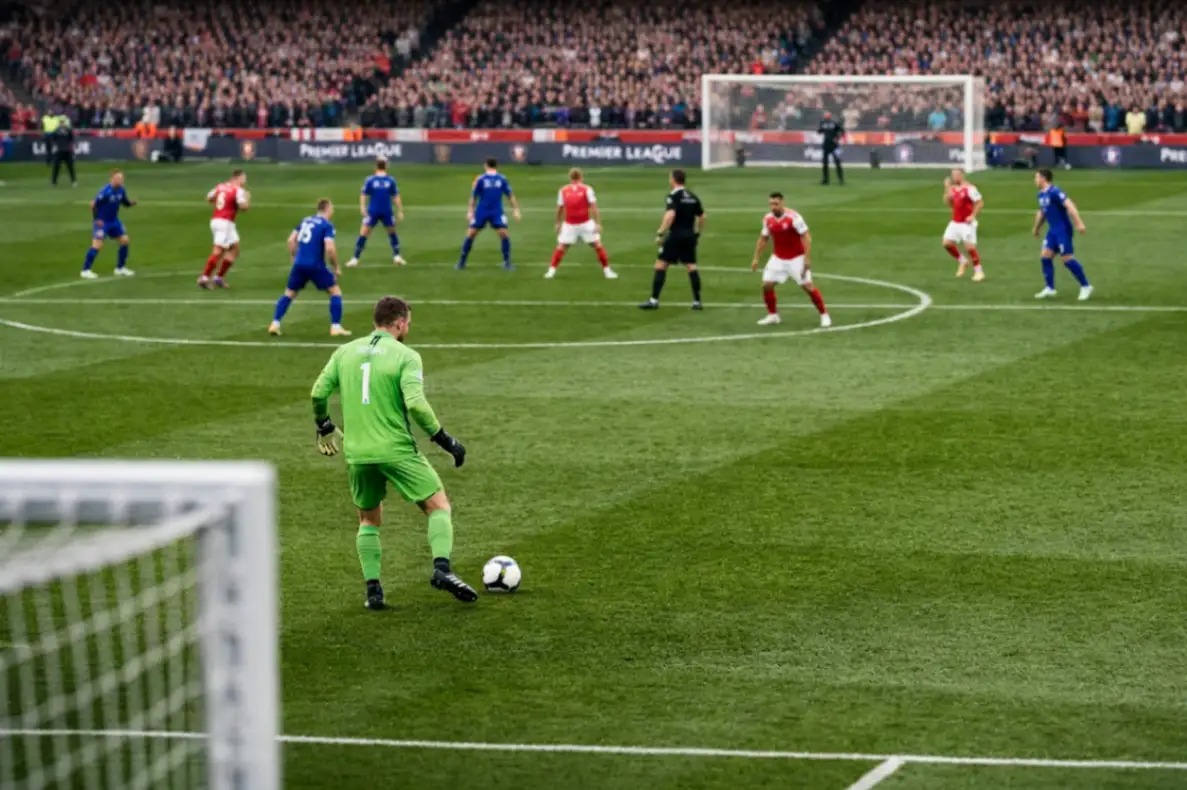
The 2026 season of the English Premier League has introduced one of the most discussed regulatory adjustments in recent years — the new goalkeeper rule. While at first glance it may seem like a minor procedural change, analysts, coaches, and players quickly realized that it directly affects tactical structure, pressing intensity, and even defensive organization.
Modern football has already been evolving toward faster build-ups and aggressive pressing systems. Goalkeepers have become active participants in possession play, often acting as an extra defender during the first phase of build-up. The Premier League’s updated rule further accelerates this trend.
This article explores how the new goalkeeper rule in the Premier League 2026 works, why it was introduced, and how it is already changing tactical approaches across the league.
Why the Premier League Introduced the New Goalkeeper Rule
Football authorities have been searching for ways to increase game tempo and reduce time-wasting. Over the past decade, referees frequently penalized teams for delaying restarts, especially goalkeepers holding the ball too long.
The new Premier League goalkeeper regulation aims to address this issue directly. Instead of loosely enforced time guidelines, referees now follow a clearly defined limit on ball possession in the goalkeeper’s hands. Once the goalkeeper gains control of the ball, they must release it within a stricter timeframe.
If the limit is exceeded, the opposing team receives a corner kick rather than an indirect free kick, which was previously the standard punishment in many competitions. The reasoning behind this change is simple: an attacking set piece represents a more immediate threat and discourages intentional delays.
From a tactical perspective, this modification encourages teams to maintain a faster rhythm of play. Coaches now instruct goalkeepers to immediately evaluate passing lanes rather than slowing the tempo. In high-intensity leagues such as the Premier League, even small timing changes can significantly influence match dynamics.
How the New Premier League Goalkeeper Rule Works
Understanding the exact mechanics of the rule is essential for analyzing its tactical implications. The updated regulation establishes clear conditions for goalkeeper possession and restart timing.
Before discussing its impact on strategy, it is useful to summarize the core elements of the rule.
| Rule Element | Description |
|---|---|
| Possession Time Limit | Goalkeepers have a strict time limit to release the ball after gaining control. |
| Enforcement | Referees actively count possession time instead of issuing verbal warnings. |
| Penalty | If the limit is exceeded, the opposing team receives a corner kick. |
| Objective | Reduce time-wasting and increase match tempo. |
| Tactical Impact | Forces quicker distribution and improves pressing opportunities. |
The most important aspect of the rule is the shift in punishment. A corner kick creates an immediate attacking opportunity and therefore acts as a stronger deterrent than previous sanctions.
This change means goalkeepers must make decisions faster. In many situations they now release the ball within seconds, either by rolling it to defenders or launching a quick counterattack.
As a result, build-up patterns have become more dynamic and less predictable.
Tactical Adjustments Teams Are Making
Coaches in the Premier League quickly began adapting their tactical systems to the new rule. Since goalkeepers cannot slow the game down as easily, teams must restructure how they exit defensive phases.
Several strategic trends are already visible across the league.
• Goalkeepers are positioning themselves higher to shorten passing distances and accelerate distribution.
• Centre-backs are spreading wider during possession to create immediate passing options.
• Full-backs are pushing forward earlier to support quick transitions.
• Defensive midfielders are dropping deeper to offer a safe passing outlet.
• High-pressing teams are triggering pressure immediately after goalkeeper possession.
These changes illustrate how a seemingly simple rule modification can cascade through an entire tactical system.
The key idea is speed. Teams that previously relied on slow restarts now face pressure to play faster, which increases the overall tempo of matches.
Impact on High Pressing and Defensive Structure
The new goalkeeper rule also strengthens pressing strategies. High-pressing teams benefit from predictable restart timing because they know exactly when the goalkeeper must release the ball.
Pressing triggers now occur more frequently. For example, once a goalkeeper catches a cross, attackers immediately position themselves to block passing lanes. Since the goalkeeper cannot hold the ball for long, defenders often receive the ball under immediate pressure.
Clubs known for aggressive pressing systems — such as Liverpool, Arsenal, and Tottenham — are particularly well suited to exploit the rule.
Another tactical consequence involves defensive line positioning. Teams often push their defensive block slightly higher because quicker restarts reduce the risk of slow counterattacks.
This compresses the field and creates more midfield duels.
How Goalkeepers Are Adapting Their Playing Style
Modern goalkeepers already function as “sweeper-keepers,” but the 2026 rule accelerates this transformation.
Many keepers now train specifically for faster decision-making and distribution accuracy. Coaches are placing greater emphasis on scanning the field before catching the ball so that the goalkeeper already knows where the next pass will go.
Distribution methods are also evolving. Instead of holding the ball and allowing teammates to reorganize, goalkeepers increasingly rely on quick throws and one-touch passes.
In addition, physical conditioning for goalkeepers has become more demanding. Since transitions happen faster, keepers must remain mentally and physically alert throughout the match.
This evolution reflects a broader trend in football where every player participates actively in build-up play.
Could the Rule Spread to Other Competitions
The Premier League often acts as a testing ground for innovations in football governance. When regulatory experiments prove successful, other competitions frequently adopt similar measures.
If the new goalkeeper rule effectively reduces time-wasting and increases attacking opportunities, international bodies such as FIFA and UEFA may consider implementing it in major tournaments.
Leagues across Europe are closely monitoring its early impact. Tactical analysts are already collecting data on ball-in-play time, pressing success rates, and goal creation following goalkeeper restarts.
Should these metrics demonstrate a more dynamic style of football, the rule could eventually appear in competitions like the UEFA Champions League or even the FIFA World Cup.
Conclusion
The new Premier League goalkeeper rule in 2026 demonstrates how small regulatory adjustments can reshape tactical landscapes. By limiting possession time and introducing a more impactful penalty for delays, the league has effectively increased the pace of matches.
Teams are responding with faster build-up patterns, more aggressive pressing systems, and evolving goalkeeper roles. What began as a measure against time-wasting is already influencing tactical planning across the league.
As the season progresses, analysts will continue to observe how clubs refine their strategies around this rule. One thing is clear: goalkeepers are no longer just the final defensive barrier — they are now central figures in the speed and structure of modern football.